How to reduce EMF from your phone (what actually works)
The steps that reliably cut the radio energy your body absorbs from a phone are free. Put calls on speaker or a wired headset so the phone stays off your head, and text instead of calling when the signal is weak. Stickers and other "shields" have no scientific proof behind them, the FTC says, and one that interferes with the signal can make the phone use more power.
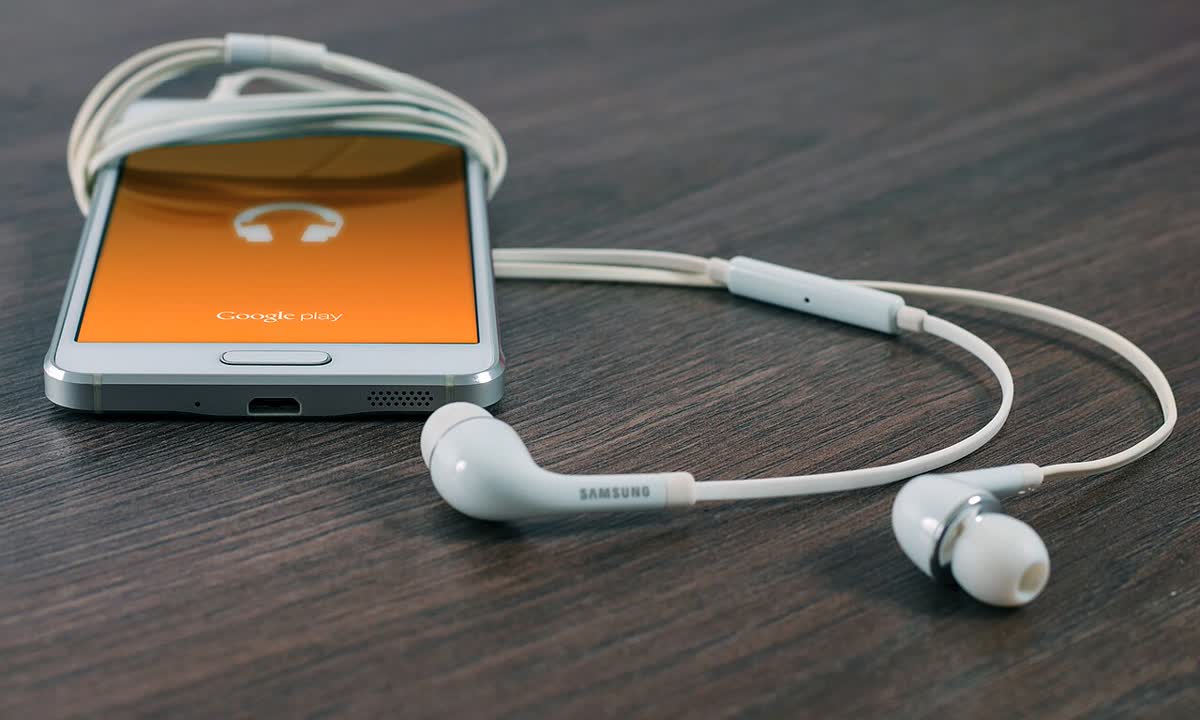
Is phone radiation something you need to block?
Phones talk to the network with radio waves, the RF part of what people call EMF. Since 1996 the FCC has required wireless devices sold in the US to meet its exposure limits.
The FDA says "the weight of scientific evidence has not linked cell phone radio frequency radiation with any health problems." The National Cancer Institute says the evidence to date suggests phone use does not cause brain or other cancers. You may have read that in 2011 a working group at IARC, the World Health Organization's cancer agency, called cell phone use "possibly carcinogenic to humans." NCI notes that the label rested on limited evidence from human and rodent studies.
The FCC doesn't endorse the need to cut exposure further, but it publishes simple steps for people who want to. This guide covers them.
How do I reduce EMF on my phone?
Most of the gain comes from distance. The FCC's consumer guide puts it plainly: the closer the device is to your body, the more energy you absorb. NCI adds that SAR, the rate at which the body absorbs RF energy, drops very quickly as you move away from the source.
Put calls on speaker or use a headset
Speakerphone or a headset takes the phone off your head. The FCC notes that a wired earpiece may conduct some energy to the head and a wireless one gives off a little of its own, but both move the phone, the biggest source, away from your head. NCI says Bluetooth earbuds typically transmit at power levels 10 to 400 times lower than cell phones.
If you'd rather have no radio in your ear at all, wired earbuds are the simple choice link soon. A phone with only a USB-C port takes USB-C earbuds or a USB-C to 3.5 mm adapter.
Text more and keep calls short
The FCC and NCI both suggest texting instead of talking (never while driving), and the FTC says to text more and keep calls brief. Phones typically emit more RF energy while you're using them, the FCC adds.
Wait for a good signal
A phone on a weak signal works harder. NCI says a weak signal makes phones boost their transmission power. The FTC puts it more bluntly: the phone "works harder and emits more radiation." Samsung's SAR page says the same from the other side: the closer you are to a cell site, the more likely the phone's actual SAR is lower.
So if you see one bar, send a text or wait until you've moved. Save the long call for a strong signal.
Keep it out of your pocket and your bed
Phone makers test body-worn use with a small gap: 5 mm for iPhones against the torso, 0.5 cm for the Galaxy S26, 1.0 cm for the Pixel 10. Samsung says to keep the phone at least that far from your body, and Google asks for accessories with no metal in them. A tight pants pocket can hold a phone closer than those test gaps.
A bag or a belt holster without metal parts keeps the distance. At night, a nightstand or dresser is a better spot than the mattress next to your head.
Use airplane mode overnight if you want the radios off
On an iPhone, Airplane Mode turns off cellular and Wi-Fi but leaves Bluetooth on. Switch Bluetooth off while in Airplane Mode and the phone remembers that next time (Apple, February 2026). On a Pixel, Wi-Fi and Bluetooth go off the first time, and after that the phone keeps your last choice.
The catch: no calls or texts come through. If you need to be reachable at night, put the phone across the room instead.
What is the best EMF blocker for cell phones?
We don't recommend any of the stickers or "shield" chips sold as blockers. In 2011 the FTC told consumers there is no scientific proof that so-called shields significantly reduce exposure. It called products that cover only part of the phone, like the earpiece, totally ineffective, because the whole phone emits. A shield that interferes with the signal, it warned, may make the phone draw more power and possibly emit more radiation.
The FTC had been here before. In February 2002 it charged two sellers of earpiece patches advertised to block up to 97% or 99% of radiation, saying there was no scientific evidence the products worked as claimed.
Two product types do what they say:
- Wired earbuds or a wired headset. They put distance between the phone and your head, which the FCC names as one of the most effective steps. link soon
- A Faraday pouch, a closed bag lined with conductive fabric. While the phone is sealed inside it can't reach the network, so it can't ring either. To test one, seal your phone inside and call it from another line. A ring means the signal is getting through. link soon
Airplane mode with Bluetooth switched off gets you close to the pouch result for free.
What phone case blocks EMF radiation?
A case that truly blocked the signal would leave you with a phone that can't connect, and one that blocks part of it runs into the FTC's warning about the phone pushing more power. The phone makers add a separate point. Apple's RF exposure pages say cases with metal parts may change the phone's RF performance, including its compliance with exposure guidelines, in ways that haven't been tested or certified. Google tells Pixel owners to use cases and holsters with no metal components.
So the case to buy is a plain one with no metal in it. If you wear the phone on a belt, pick a holster that holds it off your body.
What SAR means and how to find your phone's number
SAR (specific absorption rate) measures how fast the body absorbs RF energy, in watts per kilogram. The US limit for phones is 1.6 W/kg averaged over 1 gram of tissue (47 CFR 1.1310). Hands, wrists, feet, ankles and the outer ear count as extremities, with a 4 W/kg limit over 10 grams. Labs measure SAR with liquid-filled models of a head and body and a robotic probe while the phone runs at full power, as the FCC's SAR guide describes.
W/kg averaged over 1 gram of tissue, phone held against the head at full power in the lab. Read on manufacturer pages on November 9, 2026.
| Phone (US model) | Head SAR |
|---|---|
| FCC limit, head (1 g) | 1.6 W/kg |
| iPhone 18 Pro (A3472) | 1.20 W/kg |
| iPhone 17 (A3258) | 1.19 W/kg |
| iPhone 16e (A3212) | 1.19 W/kg |
| Galaxy S26 (SM-S942U) | 1.19 W/kg |
| Pixel 10 | 1.18 W/kg |
| Galaxy S26 Ultra (SM-S948U) | 1.09 W/kg |
| Pixel 10 Pro | 0.99 W/kg |
| Galaxy A16 5G (SM-A166U) | 0.56 W/kg |
Sources: Apple RF exposure pages, Samsung SAR lookup, Google Pixel 10 safety guide; limit from FCC.
Every phone in the chart sits under the limit. The highest head value, 1.20 W/kg, is 75% of it, and the Galaxy A16 5G's 0.56 is less than half of that. It's tempting to shop by the number. The FCC advises against it: one SAR value can't reliably compare phones in everyday use, and the gap between models is small next to what distance gets you. An FTC consumer alert from September 2011 agrees that picking a lower-SAR phone will not reliably mean lower absorption. The published figure is a lab maximum. In everyday use, the FCC says, a phone usually transmits well below that test power.
For the pocket question, the body-worn numbers help more, since they come with the gap the maker tested at.
| Phone | Body-worn SAR (W/kg) | Gap from the body in the test |
|---|---|---|
| iPhone 18 Pro | 1.20 | 5 mm |
| iPhone 17 | 1.19 | 5 mm |
| iPhone 16e | 1.2 | 5 mm |
| Galaxy S26 | 1.20 | 5 mm |
| Galaxy S26 Ultra | 1.19 | 5 mm |
| Galaxy A16 5G | 0.87 | 10 mm |
| Pixel 10 | 0.99 | 10 mm |
| Pixel 10 Pro | 0.99 | 10 mm |
Source: Apple and Samsung RF exposure pages for the US models and Google's Pixel 10 safety guide (values for countries with the 1.6 W/kg limit), read November 9, 2026. Samsung and Google list the gap in cm, shown here in mm.
To look up your own phone:
- iPhone: Settings > General > Legal & Regulatory > RF Exposure.
- Pixel: Settings > About phone > Regulatory labels.
- Samsung Galaxy: enter your model number (it starts with SM-) on Samsung's SAR lookup page at samsung.com/sar.
- Any phone sold in the US: search its FCC ID at fcc.gov/oet/ea/fccid, where the grantee code is the first three or five characters. The FCC says the highest SAR values are usually in the comments section of the equipment grant, and dialing *#07# shows them on certain models.
What an EMF meter can and cannot show
An RF meter reads field strength in the air where you hold it, in volts per meter or as power density. SAR is the rate at which tissue absorbs energy, measured inside a liquid-filled model, so a handheld meter can't tell you a phone's SAR or whether it meets the FCC limit.
ARPANSA, Australia's radiation safety agency, adds more limits. The broadband meters sold online add up all the RF around you and can't separate a phone from a Wi-Fi router or a cell tower; that takes a spectrum analyzer. ARPANSA also can't confirm the accuracy of consumer models, which depends on build quality and calibration.
Gauss meters are another trap. They read magnetic fields from electrical sources, commonly in milligauss (mG), and ARPANSA says the ones it rents out aren't suitable for phone RF. Readings a few centimeters from a phone may be false.
What a meter can show is a relative change at one spot: a reading with the phone on a call next to it, then one with the phone in airplane mode or across the room. Expect the number to bounce, because phones change their power all the time. If you buy one, check that it measures RF and not only magnetic fields. link soon
A quick checklist
- Use speakerphone or wired earbuds for anything longer than a quick call.
- Text when a text will do, but not while driving.
- On one bar, text or wait. Make long calls on a strong signal.
- Carry the phone in a bag, not a tight pocket, and keep it off the bed at night.
- Use airplane mode overnight if you don't need calls.
- Choose a case with no metal parts and skip stickers, chips and partial shields.
- Don't shop by SAR. Every phone sold in the US is certified to the same limit.
If you change one habit, make it the speaker button on your next long call. The FCC calls holding the phone away from your head and using a speakerphone or hands-free accessory the most effective ways to reduce exposure, and says those steps do more than the small SAR differences between phones.