EMF protection for your home: practical steps that cost little
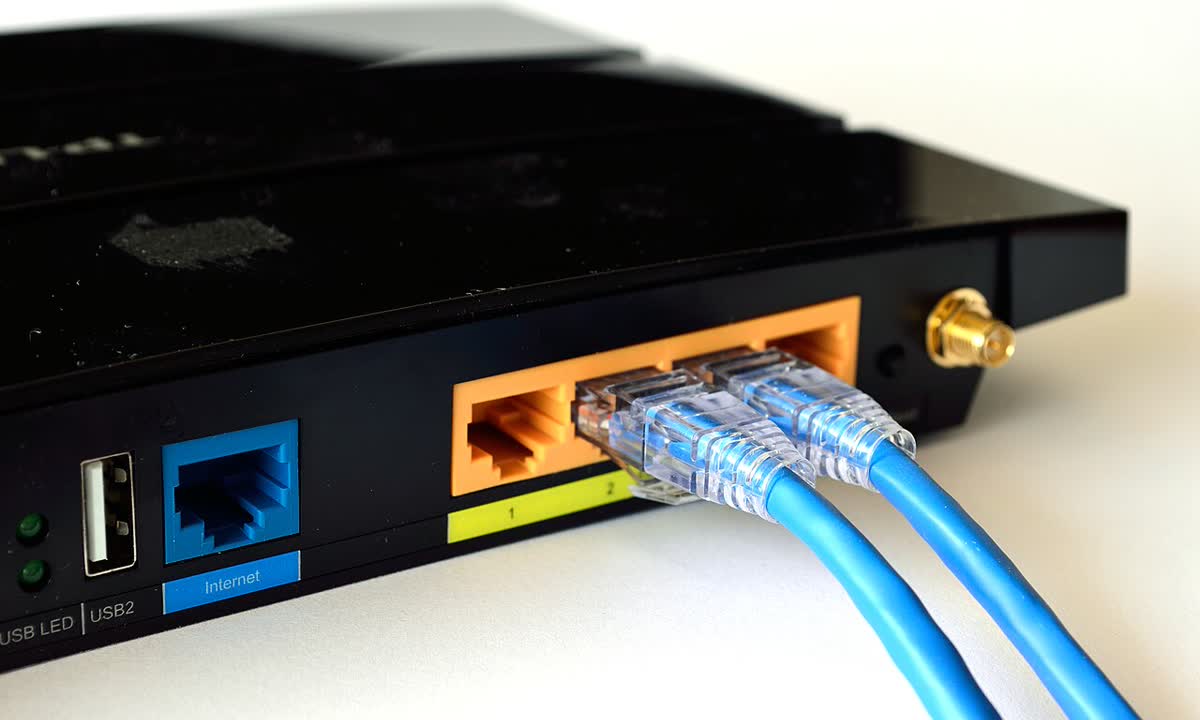
The cheapest EMF protection for a home is distance. Move the Wi-Fi router out of the bedroom, charge your phone across the room, put desk computers on an Ethernet cable and switch Wi-Fi off overnight, since fields from wireless gear and from house wiring both fall off fast as you step away. Plug-in "whole house" protectors are left off that list on purpose: we found no federal agency evidence that they lower anything.
None of this is a health warning. The FDA's position (page updated May 2021) is that the weight of scientific evidence has not linked cell phone radio frequency energy with any health problems. These steps are for anyone who wants less exposure anyway.
How can I protect my house from EMF?
Split your home's sources into two groups. The first sends out radio-frequency (RF) energy. The National Cancer Institute's fact sheet on electromagnetic fields (reviewed 2022) names cell phones, smart meters, tablets and laptops, Wi-Fi and cordless phones. A wireless baby monitor belongs here too. The second group makes extremely low frequency (60-Hz) fields: power lines, the wiring in your walls, and appliances like hair dryers and electric blankets.
NIEHS says your exposure depends on how strong a source is, how far you are from it and how long you stay. You can't change how a router is built. You can change where it sits and when it runs.
Know where the legal lines are, too. Every wireless device sold in the US since 1996 has had to meet FCC exposure rules, per the FCC's guide to wireless devices and health. Wi-Fi runs at roughly 2.4 to 5.8 GHz, and in that range the public limit in 47 CFR 1.1310 is 1.0 mW/cm² (equal to 10 W/m²), averaged over periods of up to 30 minutes. NCI says Wi-Fi and cell phones both emit far below the 10 W/m² guideline from ICNIRP, an international commission. For 60-Hz fields, an NIEHS booklet from 2002 says the US has no federal standard for home exposure at all. Even the FCC, while listing distance tips, says it "does not endorse the need for these practices."
Which devices emit the most EMF?
In NCI's comparisons, the cell phone comes out ahead. Exposure from Wi-Fi is considerably lower than from cell phones. Cordless phones need a nearby base, so their signals are generally much weaker than a cell phone's. Smart meters give off fields so faint they sometimes can't be told apart from the RF already in your house. So a phone on your pillow is the one to think about.
For 60-Hz fields, the big readings come from motors held close. In measurements the EPA published in 1992 and NIEHS later reprinted, a can opener's median field was 600 milligauss (mG) at 6 inches and 2 mG at 4 feet, 300 times weaker. A hair dryer read 300 mG at 6 inches and 1 mG at one foot. NCI's summary: magnetic fields drop off steeply about a foot from most appliances.
Milligauss (mG). Each step on the axis doubles the distance. A gap means the field could not be told apart from background with the appliance off. Measurements published by the EPA in 1992.
Show the numbers
| Distance | Can opener | Vacuum cleaner | Hair dryer |
|---|---|---|---|
| 6 in | 600 mG | 300 mG | 300 mG |
| 1 ft | 150 mG | 60 mG | 1 mG |
| 2 ft | 20 mG | 10 mG | background |
| 4 ft | 2 mG | 1 mG | background |
Source: NIEHS, EMF booklet (June 2002), appliance table citing EPA, EMF In Your Environment (1992); NIEHS EMF page.
For scale, an Electric Power Research Institute survey of 992 US homes (1993) found that half averaged 0.6 mG or less across all rooms, measured away from appliances. The appliance figures are from 1992, and yours may differ.
How to lower EMF in your house, room by room
The bedroom matters most, since that's where you stay in one spot for hours. The free fix comes first in every row.
| Room | Source | What to do | Cost |
|---|---|---|---|
| Bedroom | Phone on the nightstand or bed | Charge it across the room; at night, airplane mode with Wi-Fi off | Free |
| Bedroom | Wi-Fi router or mesh node | Move it to a hallway; schedule Wi-Fi off overnight | Free or a timer |
| Bedroom | Cordless phone base | Put the base in another room | Free |
| Bedroom | Bed against the wall with the panel or meter | Move the bed to another wall | Free |
| Bedroom | Electric blanket | Warm the bed, then switch it off | Free |
| Nursery | Baby monitor | Unit and cord at least 3 feet from the crib | Free |
| Office, living room | Desktop, TV, console | Ethernet cable, then that device's Wi-Fi off | A cable |
| Kitchen, bathroom | Can opener, hair dryer, vacuum | Step back once it's running | Free |
| Any room | High readings at a wall with nothing plugged in | Electrician checks the wiring | Service call |
Move the router out of the bedroom
FCC engineering guidance (OET Bulletin 65, 1997) says power density away from an antenna falls with the square of the distance. Double the distance and you get a quarter. Go from 2 feet to 8 feet and you're down to a sixteenth. Walls and reflections make a real room messier than the math, but a hallway spot outside the bedroom door is still a real gain over the nightstand. A mesh node counts as a router here.
Example, not a measurement. Power density at each distance as a share of the level at 2 feet, using the far-field formula in FCC OET Bulletin 65 (1997), where power density falls with the square of distance. Assumes one antenna, steady output, open space and no walls or reflections. Real rooms will differ.
| Distance from router | Share of the 2 ft level |
|---|---|
| 2 feet | 100% |
| 4 feet | 25% |
| 8 feet | 6.3% |
| 16 feet | 1.6% |
Calculation: (2 / distance)^2, based on FCC OET Bulletin 65, Edition 97-01 (August 1997).
Plug in the things that never move
A desktop, TV, game console or desk laptop can run on an Ethernet cable link soon. The cable carries data over wire, so once a device is plugged in, turn its Wi-Fi off. The router's own Wi-Fi stays on, which is the next step.
Turn Wi-Fi off at night
Look in your router's app or admin page for a Wi-Fi schedule. No schedule? A plug-in outlet timer link soon can cut power from, say, 11 p.m. to 6 a.m. Check one thing first: if your home phone or security cameras run over the internet, the timer takes them offline for those hours as well.
Keep the phone off the bed
The FCC's plainest tip is to increase the distance between wireless devices and your body. A charger on the dresser does it. Airplane mode cuts the cellular connection, but the FAA's flight rules still let you use Wi-Fi with it on, so check that Wi-Fi is off too. Weak reception in a back bedroom makes this matter more, because the FTC says a phone "works harder" on a weak signal.
Cordless phone bases and baby monitors
The cordless base stays wherever you set it, so the kitchen or hallway beats the nightstand. A corded phone uses no radio at all. For baby monitors, the Consumer Product Safety Commission says to keep cords at least three feet from any part of the crib and never mount a monitor on the crib's edge. That rule is about strangulation, but it buys distance too.
Smart meters, the panel and the wiring
If the meter or the electrical panel sits on the other side of your bedroom wall, moving the bed is free. You may also be able to opt out of a wireless meter. California's Public Utilities Commission, in a February 2012 decision, let PG&E home customers switch to an analog meter for interim fees of $75 up front and $10 a month (less for CARE customers). Rules and fees differ by state and change, so ask your utility for the current tariff.
An electric blanket makes a magnetic field only while current flows, so warm the bed and switch it off. If one wall reads high with nothing plugged in, NIEHS says incorrect wiring is a common cause of higher-than-usual magnetic fields, and worth fixing for safety anyway.
Is there an EMF blocker that can be used in bedrooms?
Not one with evidence behind it, if you mean a plug-in "whole house" unit or a sticker. In 2011 the FTC said there's no scientific proof that so-called shields significantly reduce exposure from cell phones, and that a shield interfering with the signal may make the phone draw more power. The FCC says phone shielding devices generally don't work as advertised and may even raise absorption. In 2002 the FTC charged two sellers of phone patches with falsely claiming to block up to 97% or 99% of radiation. We found no FCC, FDA or FTC statement backing a plug-in whole-house unit.
It comes down to physics. A box in a wall outlet changes neither the router's output nor the router's distance from your pillow, and those two set the reading. Magnetic fields from wiring pass through most materials, NIEHS says, so they're hard to shield anyway.
Already own one? Take a meter reading at your pillow with the router on. Plug the device in and read the same spot again. If the number doesn't move, you have your answer.
How to tell if your house has high EMF?
A consumer EMF meter link soon is good at comparisons. It shows whether moving the router lowered the reading at your bed, or whether one wall reads far above the rest of the room. NIEHS suggests measuring at the time and place you're usually near the equipment.
It can't tell you whether a number is safe. FCC limits are averaged over time, while a meter gives a spot reading, which NIEHS defines as instantaneous or very short-term. A brief spike on the screen isn't the number the rule describes. Units vary too: RF meters show volts per meter or power density (1 mW/cm² equals 10 W/m²), and magnetic meters show mG or microtesla (1 µT equals 10 mG). Governments don't standardize EMF measurements or certify the people who take them, NIEHS notes, so compare readings from the same meter.
For 60-Hz readings, most people in the US average less than 2 mG, per the NIEHS booklet. WHO's EMF Q&A (2016) puts background in homes away from power lines at up to about 0.2 µT, which is 2 mG. A reading far above 2 mG in the middle of a room, away from appliances, is worth showing an electrician.
A short checklist
- Phone charging across the room, not on the bed or nightstand
- Router or mesh node out of the bedroom, even if only to the hallway
- Wi-Fi off overnight, by router schedule or outlet timer
- Desk computers and the TV on Ethernet, with their Wi-Fi turned off
- Cordless phone base out of the bedroom
- Baby monitor and cord at least 3 feet from the crib
- Bed off the wall shared with the panel or meter
- One meter reading at the pillow before and after, so you know what changed
A tape measure and one evening cover most of this. Stand at your pillow and look at everything within arm's reach that sends a signal. Move that first.