AirPods and EMF: what Bluetooth earbuds actually emit
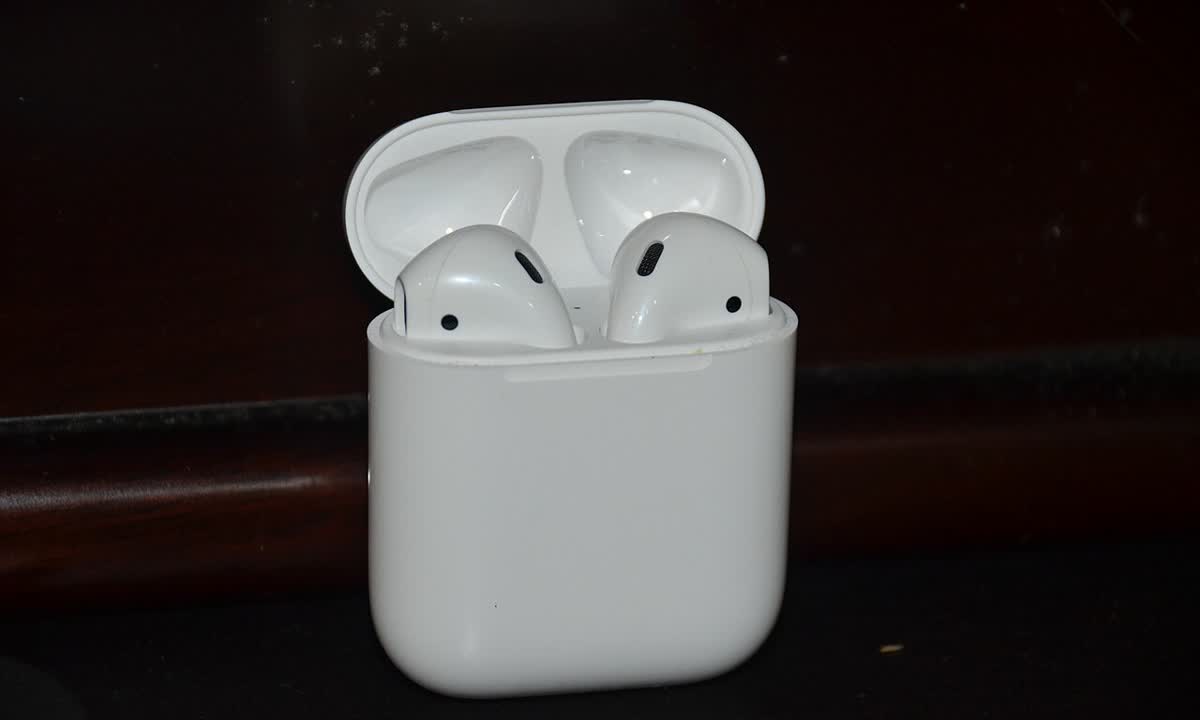
AirPods do transmit radio waves, and the published numbers are small. In the SAR report Apple filed with the FCC, the right earbud of AirPods Pro 3 (2025) peaked at 0.16 W/kg in the head test, a tenth of the 1.6 W/kg federal limit, while Apple lists an iPhone 17 held against the head at 1.19 W/kg. We found no test data showing that an "AirPods EMF blocker" lowers anything, so if you want less exposure, the fixes that work are plain ones: a wire, or more distance between you and the radio.
What a Bluetooth earbud transmits
Bluetooth is a short-range radio link. The Bluetooth SIG says the technology supports transmit power from 0.01 mW to 100 mW, and that picking a level is a tradeoff between range and battery use. You may have seen Class 1, 2 or 3 on a spec sheet. Those power classes split the same span into bands with Class 1 at the top, and the SIG dropped them in Core 7.0 (November 2026), explaining that they had only ever been descriptive.
For a real earbud, the FCC grant for the AirPods Pro 3 right earbud (FCC ID BCG-A3063) lists a peak Bluetooth output of 0.038905 W, about 39 mW. The FCC limits that apply to earbuds don't cap that output directly. They cap how much of the energy your body absorbs.
What SAR measures and where the limits sit
SAR, the specific absorption rate, is in Apple's words "the rate at which the body absorbs RF energy." The federal rule, 47 CFR 1.1310, caps it for the general public at 1.6 W/kg averaged over any 1 gram of tissue. Extremities get 4 W/kg over 10 grams, and the rule counts wrists and the outer ear as extremities. The earbud reports still measure against the stricter 1.6 W/kg head limit.
We expected to find AirPods on Apple's RF exposure page, next to the iPhone. They aren't there. The page covers iPhone, Apple Watch and several other product lines, so the earbud figures below come from the SAR reports Apple filed with the FCC.
Lab ceilings at maximum transmit power, not everyday exposure. AirPods 4 and iPhone 17 were tested touching the phantom, AirPods Pro 3 at 5 mm, Apple Watch at 10 mm from the face.
| Device (year, model) | Head SAR |
|---|---|
| FCC limit, head (1 g) | 1.6 W/kg |
| AirPods 4, right earbud (2024, A3050) | 0.11 W/kg |
| AirPods Pro 3, right earbud (2025, A3063) | 0.16 W/kg |
| Apple Watch Series 11 GPS 42mm (2025, A3331) | 0.42 W/kg |
| Apple Watch Series 11 GPS + Cellular 46mm (2025, A3337) | 1.19 W/kg |
| iPhone 17 (2025, A3258/A3519/A3520) | 1.19 W/kg |
Sources: Apple SAR reports filed with the FCC for FCC IDs BCG-A3050 (Aug 2024) and BCG-A3063 (Aug 2025); Apple RF exposure pages for Apple Watch and iPhone, read Nov 9, 2026; limit from 47 CFR 1.1310.
| Device (year) | Model | Test position | Highest reported SAR | FCC limit | Share of limit |
|---|---|---|---|---|---|
| AirPods 4, right earbud (2024) | A3050 | Head, ear tip touching | 0.11 W/kg (1 g) | 1.6 W/kg | 7% |
| AirPods Pro 3, right earbud (2025) | A3063 | Head, 5 mm | 0.16 W/kg (1 g) | 1.6 W/kg | 10% |
| AirPods Pro 3, left earbud (2025) | A3064 | Head, 5 mm | 0.15 W/kg (1 g) | 1.6 W/kg | 9% |
| Apple Watch Series 11 GPS 42mm (2025) | A3331 | Wrist, no gap | 0.03 W/kg (10 g) | 4.0 W/kg | under 1% |
| Apple Watch Series 11 GPS + Cellular 46mm (2025) | A3337 | Wrist, no gap | 0.78 W/kg (10 g) | 4.0 W/kg | about 20% |
| iPhone 17 (2025) | A3258, A3519, A3520 | Head, no gap | 1.19 W/kg (1 g) | 1.6 W/kg | 74% |
Sources: FCC SAR reports for BCG-A3050, BCG-A3063 and BCG-A3064; Apple RF exposure pages for Apple Watch and iPhone, read November 9, 2026. Share of limit is our arithmetic.
Apple also had the lab run an extra body-worn test on the earbuds as a conservative condition. Those readings run higher, up to 1.19 W/kg for one AirPods 4 earbud in a 5 GHz band, and they still sit under 1.6.
Read the chart as a set of ceilings. The FCC's guide to SAR says devices are tested at their highest power level, and that a single SAR value "does not provide sufficient information about the amount of RF exposure under typical usage conditions." Everyday use sits at or below these figures. SAR alone can't tell you how far below.
What an Apple Watch puts into your wrist
The watch figures split by model. Apple lists the Series 11 GPS 42mm at 0.03 W/kg on the wrist and the Series 11 GPS + Cellular 46mm at 0.78 W/kg. That is 26 times higher, and still about a fifth of the 4 W/kg wrist limit. The head tests, done with the watch 10 mm from the face, show the same split: 0.42 against 1.19 W/kg. Apple's own instruction is to keep the watch at least 10 mm from your face.
Airplane Mode on the watch leaves one radio on. Apple's support guide says that by default it turns off Wi-Fi and cellular and keeps Bluetooth running. You can change that in Settings, under Airplane Mode, where Wi-Fi and Bluetooth each have their own switch.
Do EMF stickers for AirPods do anything
We found no evidence that they do. The FCC filings above test each earbud on its own, and none of them measures one with a sticker attached. The FTC warned in 2011 that "there is no scientific proof that so-called shields significantly reduce exposure from cell phone emissions." It also said products that block only part of a phone, such as the earpiece, "are totally ineffective," and that a phony shield can make a phone draw more power. That alert was about phones and never mentions earbuds. Apple separately warns that iPhone cases with metal parts may change RF performance "in a manner that has not been tested or certified."
How to get less exposure if you still want it
The FCC's advice for phones is to hold the device away from your head and body and use a speakerphone or hands-free accessory. It says those steps matter more than small SAR differences between models. For earbud and watch users, that works out to:
- Use wired earbuds for long calls and long listening sessions. They have no radio in them. link soon
- Put calls on speaker and set the phone down.
- Take the earbuds out when you stop listening instead of wearing them all day.
- If you are buying a watch and do not need cellular, the GPS-only model has the lower published SAR.
- At night, take the watch off, or turn on Airplane Mode with Bluetooth switched off as well.
- Skip the stickers and pads. No test report backs them.
Moving a call from the iPhone at your ear to AirPods trades a radio tested at 1.19 W/kg against your head for one tested at 0.16 W/kg, roughly a seventh. The phone keeps transmitting from your pocket or the table, and Apple lists it at 1.19 W/kg in the body test at 5 mm. A wire or the speaker leaves no transmitter in your ear at all.